
Home / Our Stories /
Fair competition, strong manufacturing: Understanding Australia’s anti-dumping framework and Investigation 692
2 October 2026
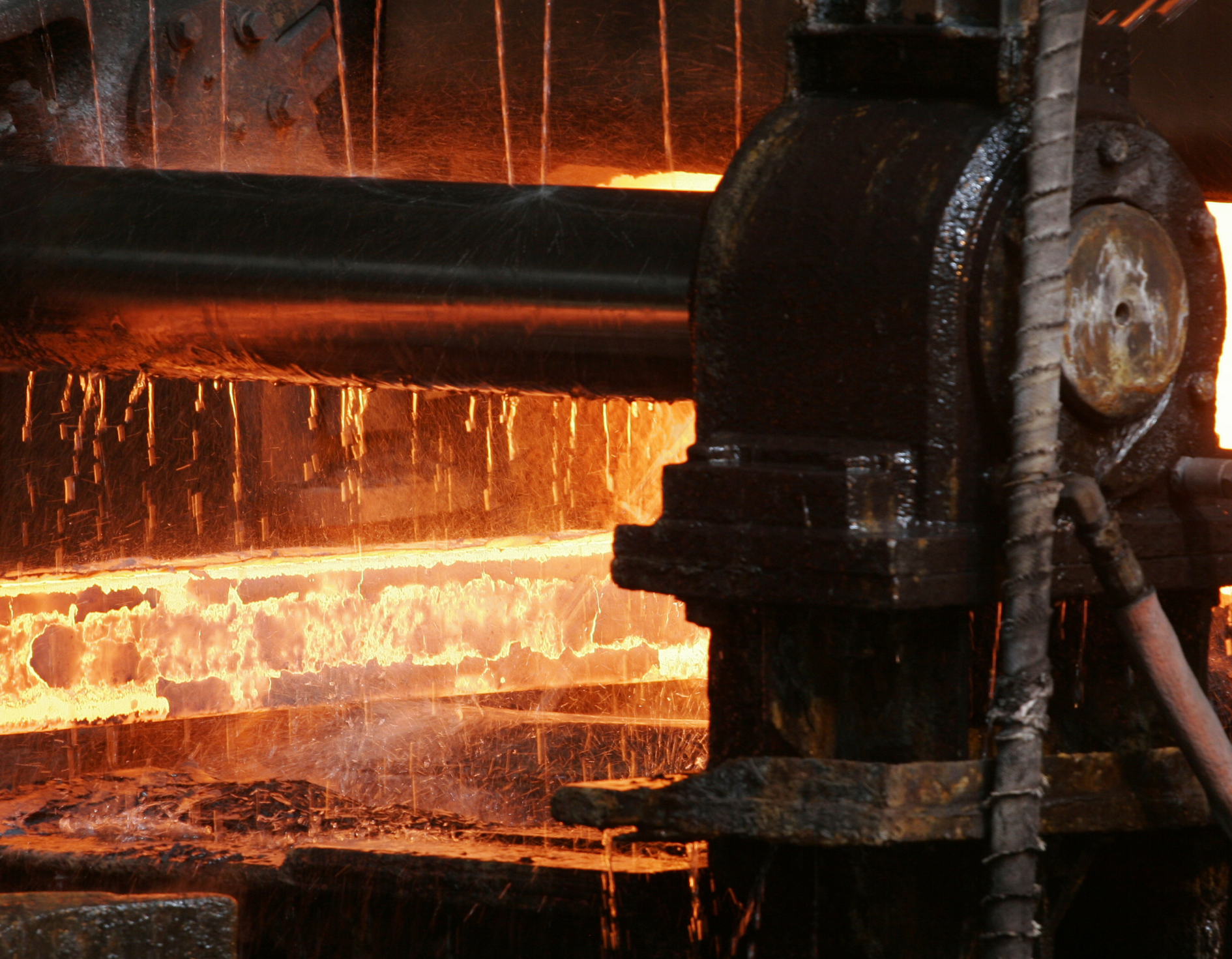
The Australian Trade Remedies Commission is currently investigating certain welded steel mesh sheets exported from China and Malaysia.
The following addresses some common misconceptions about Investigation 692 and explains the importance of trade remedies in supporting a strong domestic steel industry.
Myth 1: Anti-dumping measures are designed to ban or ‘block’ imports.
Fact: Anti-dumping measures do not ban or ‘block’ imports. Dumping measures apply to specific products exported from specific countries only. Australia imports steel products from around the world and will continue to do so.
Dumping is a form of market distortion that occurs when products are exported to Australia at prices below the price they are sold at in the exporting country. In some cases, the market distortion arises because they benefit from government subsidies that allow them to be sold at artificially low prices.
When the Australian Trade Remedies Commission determines that dumping is causing material injury to an Australian industry, duties may be imposed to offset that unfair advantage and restore a level playing field.
Myth 2: Anti-dumping measures will significantly increase the cost of building a home.
Fact: Anti-dumping measures apply only to mesh that is dumped, not mesh manufactured in Australia or mesh imported from non-dumped sources.
Housing affordability is influenced by many factors, including land, labour, financing, planning and materials. Reinforcing mesh accounts for only a small proportion of the cost of constructing a home.
It is estimated that, for builders importing mesh from dumped sources, anti-dumping measures would add less than 0.1%* to the build cost of an average home.
Note: *Assumes that approximately two tonnes of reinforcing mesh is used in an average 250m2 home, with an average build cost of $500,000. Interim dumping duty liability calculated on weighted average FOB export prices from China to Australia in August 2026. An interim dumping duty ad valorem rate of 28.5% was applied.
Myth 3: Anti-dumping measures eliminate competition
Fact: Dumping measures apply to specific products exported from specific countries only. Anti-dumping measures don’t prevent imports. Australia imports steel products from around the world and will continue to do so.
Investigation 692 is conducted independently by the Australian Trade Remedies Commission. The Commission initiated the investigation after determining there were sufficient grounds to examine allegations of dumping and injury to Australian industry. It has gathered information from manufacturers, exporters, importers and other interested parties and independently assesses the evidence.
Any findings and recommendations are made by the Commission, not by InfraBuild.
Myth 4: Anti-dumping measures cause international supply chains to ‘freeze’
Fact: Anti-dumping investigations do not stop goods from being imported. Importers remain free to source product from countries under investigation throughout the process.
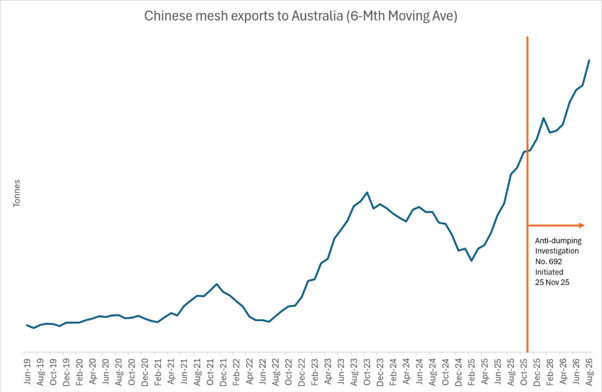
In the case of Investigation 692, imports continued to enter Australia throughout the investigation (commenced on 25 November 2025) and increased during the investigation period (1 October 2024 to 30 September 2025).
The Australian Trade Remedies Commission assesses evidence and determines whether dumping and material injury have occurred. In the case of Investigation 692, imports of Chinese welded steel mesh notably continued to increase to levels not seen before while the investigation was underway.
Myth 5: Australia’s anti-dumping system is unique or protectionist.
Fact: Australia operates a WTO-compliant trade remedies framework.
Australia’s anti-dumping system is consistent with international trade rules and similar mechanisms are used by many countries around the world. These frameworks are designed to ensure domestic industries can compete fairly when dumping and/or countervailable subsidies causes material injury.
Myth 6: Supporting anti-dumping measures means opposing free trade.
Fact: Fair trade and free trade are not mutually exclusive.
InfraBuild supports competition and regularly competes against both local and imported products. Anti-dumping measures are intended to address unfair trading practices, not legitimate competition. Australian manufacturers should be able to compete on price for comparable quality, service, innovation and efficiency within a fair market environment.
Key takeaway
Australia should have both strong competition and strong domestic manufacturing.
Investigation 692 is being assessed independently by the Australian Trade Remedies Commission under Australia’s established WTO compliant trade remedy framework. The question before the Commission is not whether imports should be allowed, but whether dumped imports have caused material injury to Australian industry and whether any measures are warranted under the law.
Please contact us for any feedback or media enquiries about this content.
Subscribe to the
InfraBuild newsletter
Receive regular updates on news, case studies as well as the latest products and services.