
By Victoria Sherwood, Chief Commercial Officer
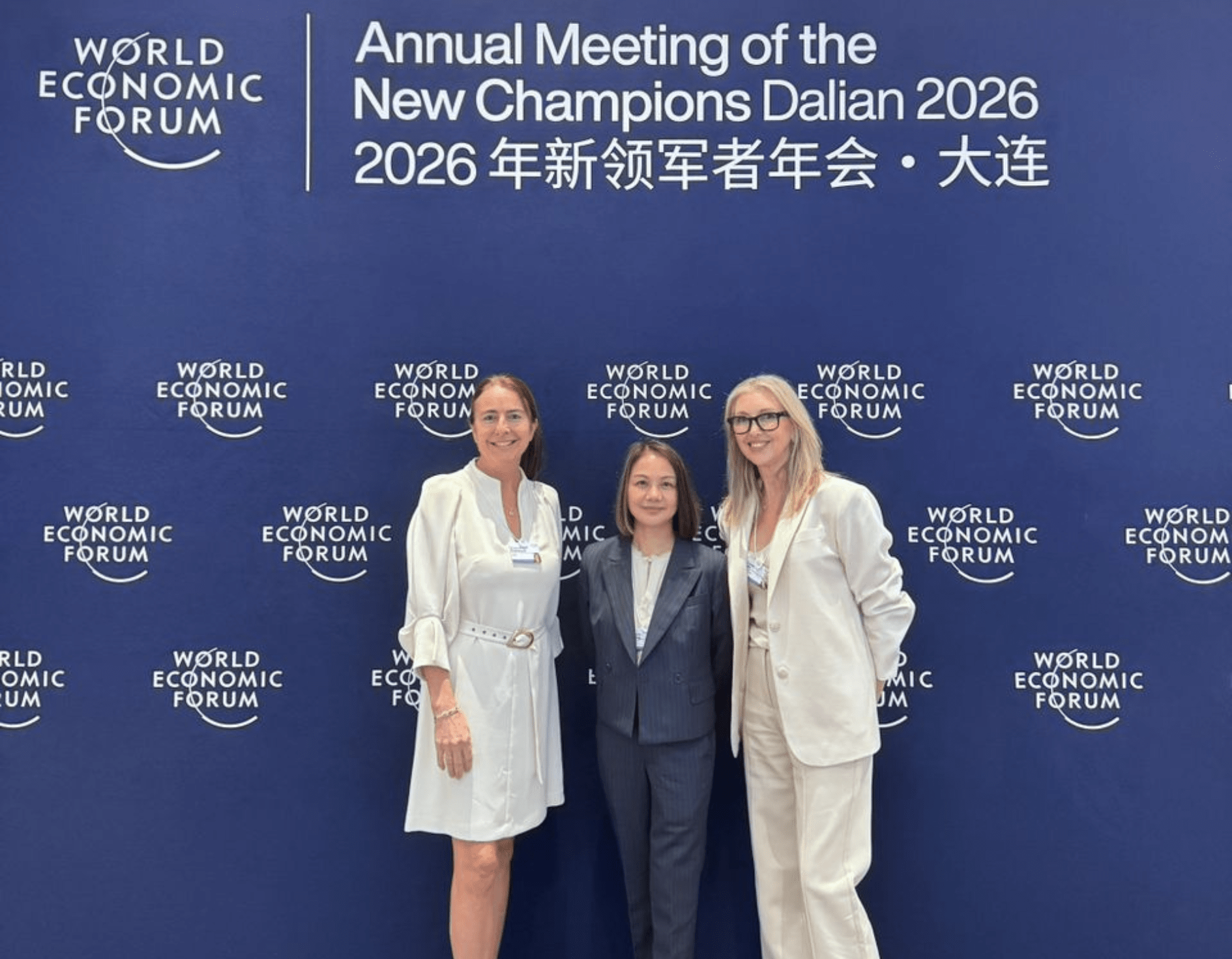
Last month I joined leaders from around the world at the World Economic Forum’s Annual Meeting of the New Champions, or “Summer Davos”, in Dalian. While the conversations spanned industries, technologies and economies, one challenge emerged again and again: how do we move innovation beyond isolated breakthroughs and deliver it at the scale needed to improve productivity? For Australia’s construction industry, that question has never been more relevant.
The productivity problem is not abstract
The numbers are stark. IMF estimates that more than half of the deceleration in worldwide growth over the first decades of this century resulted from lacklustre productivity. Meanwhile, nearly 40% of large companies have recorded a productivity decline in recent years, not an improvement.
As a partner to Australia’s construction industry, we don’t need a report to tell us this – we see it on the ground every day. Demand remains strong, yet margins are compressing, and construction companies disappearing. Growth and productivity have drifted apart from one another, and the gap between them is where risk and also opportunity lies.
Dalian reinforced something I already believed and heard articulated more sharply than usual: closing that gap won’t come from working harder within the current model. It requires questioning the model itself, including how we specify, how we procure, how we build and how we measure success.
What “innovating at scale” looks like in steel
This is exactly the territory InfraBuild has been working in with our SENSE Solutions capability.
The premise is simple: when SENSE 600® reinforcing steel is specified early, it delivers two returns from a single decision – a substantiated embodied carbon saving, and a genuine productivity and cost saving on site, through less steel, optimised logistics and handling activities and faster fixing times. Two outcomes the industry has often treated as competing objectives, delivered by the same choice.
The productivity side of the equation is where the “scale” potential gets real. The carbon benefit of specifying SENSE 600® steel holds steady no matter when in a project it’s specified. The productivity benefit doesn’t – it’s largest when the decision is made early, at design, and diminishes the later it’s left. That’s not a marketing message; it’s an engineering reality, and it’s exactly the kind of insight the industry needs more of: specific, timing-sensitive, and actionable by the people who actually make specification decisions.
Closing the gap, one project at a time
If there was a single thread running through Dalian, it was this: the world has no shortage of technology or innovation. What it lacks is the infrastructure, including the institutional, commercial and cultural support, to get that innovation into broad use quickly enough to matter.
Construction is a strong case study in exactly that gap. The tools to lift productivity meaningfully already exist. The constraint isn’t invention; it’s adoption, sequencing and trust between the people who specify, build and finance a project.
That’s the space InfraBuild wants to occupy. Not as a bystander watching the industry wait for someone else to move first, but as the partner that makes the economics of a better decision obvious and easy to act on. SENSE 600 isn’t a moonshot. It’s a proof point that the productivity gap can be reduced at the level of a single specification decision, on a single project, today!
That’s the future of construction we’re building towards.
Please contact us for any feedback or media enquiries about this content.
Subscribe to the
InfraBuild newsletter
Receive regular updates on news, case studies as well as the latest products and services.